
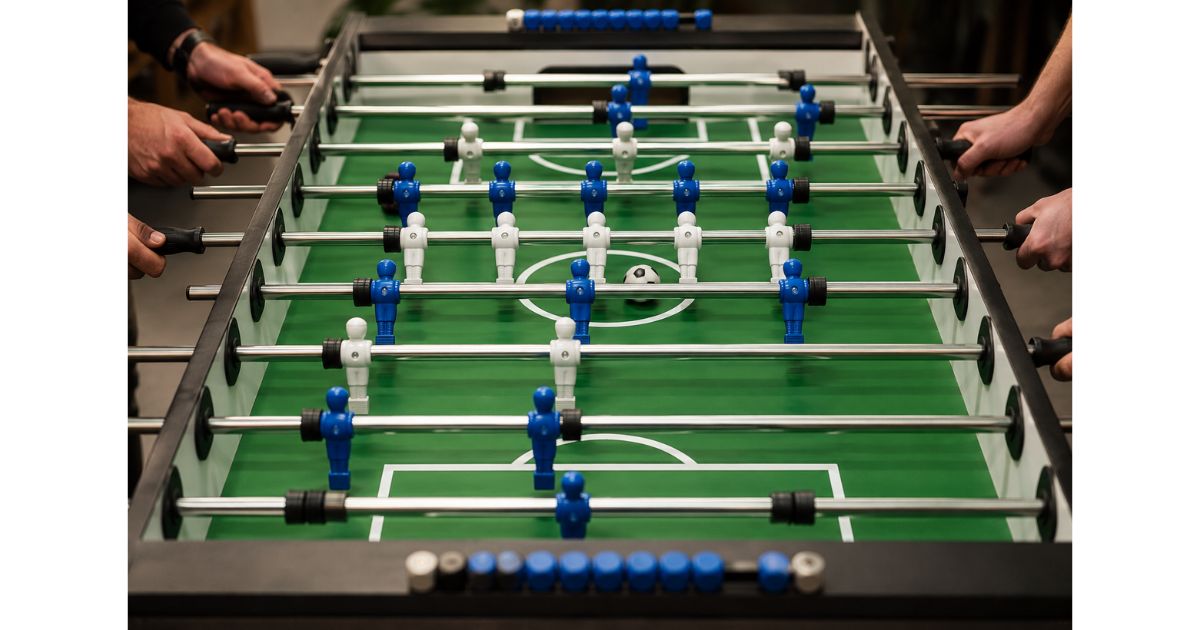
Tischkicker is a popular table football game that combines quick reactions, precise ball control, strategy, and teamwork. Whether you play casually with friends, compete in a tournament, or are just learning the basics, understanding the Tischkicker Regeln can make every match more enjoyable and fair. Although house rules may differ from one location to another, there are several common principles that players should know.
From serving the ball correctly to avoiding illegal spins and understanding how goals are counted, the rules provide a clear structure for the game. In this guide, we explain the most important Tischkicker rules in an easy-to-understand way.
Was ist Tischkicker?
Tischkicker is the German term commonly used for table football or foosball. The game is played on a specially designed table with rotating or sliding rods that control miniature football players. Depending on the table design and playing format, two or four people can compete against each other.
The objective is straightforward: players try to score more goals than their opponents by passing, controlling, and shooting the ball with their figures. Despite its simple concept, competitive table football requires considerable skill.
Die grundlegenden Tischkicker Regeln
Tischkicker Regeln starting a match, players should agree on the basic rules. This is particularly important when playing outside official competitions because recreational games often use slightly different scoring systems.
The most common rules cover:
- Starting and serving the ball
- Counting goals
- Controlling the ball
- Rotating the rods
- Passing between players
- Dead balls
- Balls leaving the playing area
- Fouls and unsportsmanlike behavior
Agreeing on these points before the game prevents arguments and keeps the match enjoyable.
How Is a Tischkicker Game Started?
The game normally begins with a serve. The exact serving procedure can depend on the table and the rules being used. In casual games, one player may simply place the ball into play from the designated serving area.
In more structured matches, the serve may be awarded according to a specific sequence or possession rule. Players should therefore establish who serves first before the match begins.
After the ball is in play, both sides attempt to gain control and create scoring opportunities.
Scoring and Winning the Match
One of the most important Tischkicker Regeln concerns scoring. A goal is normally awarded when the ball completely crosses the goal line and enters the goal.
Many casual games are played to a predetermined number of goals, such as five, seven, or ten. Tournament formats can use different scoring systems depending on the organization.
For a friendly match, agreeing on the winning score before playing is usually enough. If the game is part of an organized competition, however, the official tournament rules should always take priority.
Ball Control and Passing
Good ball control is one of the foundations of table football. Players can use their figures to stop, pass, or shoot the ball.
The ball should generally remain under reasonable control rather than being intentionally trapped in a way that violates the agreed rules. Passing the ball between rods is an important tactical element, especially in four-player games.
Experienced players often use controlled passes to move the ball from defense to midfield before creating a shooting opportunity.
The Rule Against Spinning the Rods
One of the best-known rules in Tischkicker is the restriction against spinning the rods freely.
A player should not rotate a rod through a complete 360-degree motion before or after striking the ball. In competitive play, uncontrolled spinning is generally considered illegal because it can provide an unfair advantage and reduces the importance of precise technique.
Instead, players should use controlled rod movements. This allows them to position the figures accurately and develop better shooting and passing skills.
No Excessive Table Movement
Players should avoid deliberately moving, lifting, shaking, or tilting the table. Doing so can affect the movement of the ball and give one side an unfair advantage.
Normal contact with the table during play is unavoidable, but intentionally disturbing the table is generally considered poor sportsmanship. Competitive matches can include penalties for repeated or deliberate interference.
Dead Balls and Stuck Balls
Sometimes the ball may stop in an area where no player can reach it effectively. This situation is commonly referred to as a dead ball.
The way a dead ball is handled depends on the rules being followed. In casual games, players may simply restart the ball according to an agreed procedure. In official competitions, there are usually specific rules for determining which side receives possession.
The important point is to establish a consistent method before playing.
What Happens If the Ball Leaves the Table?
Another situation players should understand is when the ball leaves the playing surface. This can happen after a powerful shot or when the ball is deflected.
The ball is normally returned to play according to the applicable rules. Depending on where and how it left the table, possession may be given to one team or the ball may be placed at a designated location.
For casual matches, players can agree on a simple restart rule to avoid unnecessary disputes.
Tischkicker Regeln für das Teamspiel
When four players participate, teamwork becomes extremely important. Usually, two players form one team and control different sections of the table.
Communication helps teammates coordinate attacks and defensive movements. Players should avoid interfering with each other’s rods or taking control of an area assigned to their teammate without agreement.
Good teams communicate about passing opportunities, defensive positioning, and shooting chances. Clear roles can make a major difference in a competitive match.
Fouls and Unsportsmanlike Behavior
Tischkicker is meant to be competitive, but fair play should always remain a priority. Players should not deliberately distract their opponents, shake the table, obstruct rods, or use physical actions to influence the ball unfairly.
Verbal distractions and unnecessary arguments can also damage the quality of a match. If a player repeatedly breaks the rules, the opposing team may request a restart, possession, or another agreed penalty depending on the playing format.
The best approach is to discuss questionable situations calmly and continue according to the agreed rules.
Why Rules Matter in Tischkicker
Rules do more than prevent disagreements. They help make the game skill-based and enjoyable for everyone.
Without basic rules, players might use uncontrolled rod spins, move the table, or interfere with opponents. Such actions can make results depend more on physical disruption than on technique.
Following consistent rules encourages players to improve their ball control, passing, positioning, shooting, and defensive abilities.
Tips for Beginners
New players do not need to memorize every competitive rule immediately. Start by learning the fundamentals:
- Keep your movements controlled.
- Avoid spinning the rods.
- Learn how to stop the ball.
- Practice short and accurate passes.
- Keep your eyes on the ball.
- Communicate with your teammate.
- Respect the agreed scoring system.
- Avoid moving or shaking the table.
- Accept decisions calmly.
- Focus on improving technique rather than simply hitting the ball hard.
As your experience grows, you can learn more advanced tournament regulations and tactical techniques.
Common Mistakes Players Should Avoid
Several mistakes are common among beginners. Spinning the rods is one of the most recognizable problems. Another is hitting the ball repeatedly without trying to control it.
Players may also forget that teamwork requires communication. In doubles, two players can easily block each other’s opportunities if they do not coordinate their movements.
Finally, changing rules in the middle of a match can cause unnecessary disagreements. It is much better to establish the rules before the first serve.
Casual Rules vs. Tournament Rules
It is useful to understand that not every Tischkicker game follows exactly the same rule set. A game played at home or in a recreational setting may use simplified rules, while professional competitions generally follow a much more detailed regulation.
Casual players can create house rules as long as everyone agrees to them. For example, players may decide to play to five goals, use a particular serving system, or introduce their own restart procedure.
In tournament situations, players should always follow the rules established by the event organizer.
Final Thoughts
Understanding Tischkicker Regeln is an important step toward becoming a better and more confident table football player. The basic principles are easy to learn: serve fairly, control the ball, avoid illegal rod spinning, respect possession rules, and never deliberately interfere with the table or opponent.
Once these fundamentals become natural, players can concentrate on more advanced skills such as passing combinations, controlled shots, defensive positioning, and team strategy. Whether you are playing a quick game with friends or preparing for a competitive match, following clear rules ensures that everyone has a fair opportunity to demonstrate their skills.
Most importantly, Tischkicker should remain fun. Good sportsmanship, respect, and consistent rules create an environment where beginners can learn and experienced players can enjoy challenging matches.